

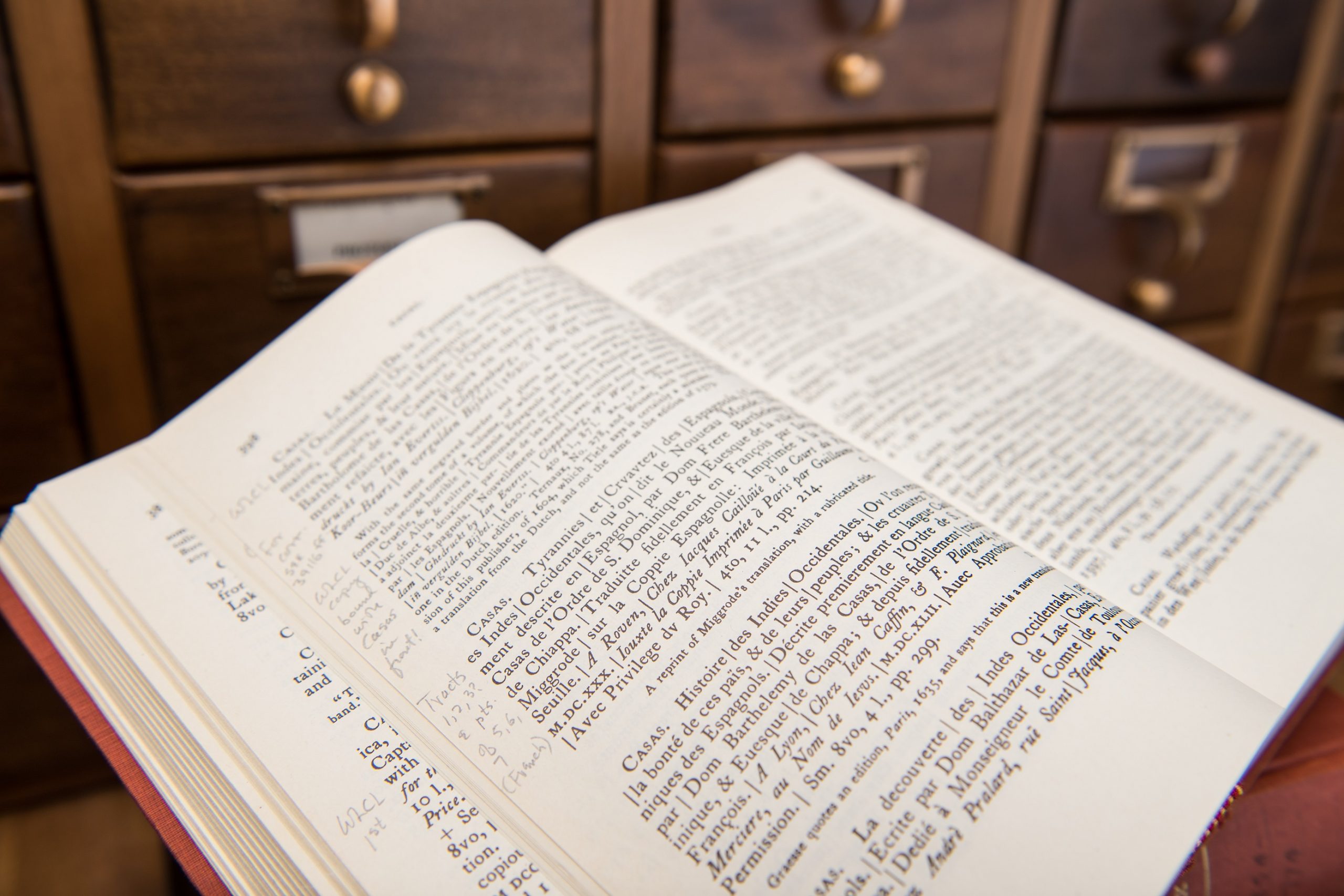
A history student I’ll call Elena is surprised to see her work flagged. She had written a careful paper on a nineteenth-century labor movement, and the highlighted passages weren’t her argument. They were two long block quotes from a primary source and a stretch of her bibliography. She asks a reasonable question: why is a detector flagging things she didn’t write at all?
This is a common source of confusion, and it can lead to unfair suspicion. This article explains how quoted material, citations and reference lists interact with detection tools, what you can do as a writer, and how readers should interpret highlights that fall on borrowed text.
What a detector sees
A detection tool receives a block of text. It doesn’t know which parts are your sentences and which are quotations, unless you remove them first. It measures the same patterns across all of it: predictability, rhythm, structure. If a quote comes from a formal, regular source, or from an older text translated into smooth modern English, it may produce signals similar to machine prose.
So when a highlight lands on a quotation, the tool isn’t saying the author used AI. It’s saying that those words, taken alone, look statistically similar to generated text. That says nothing about who put them in the paper.
Why references and citations are odd text
A bibliography is an unusual kind of writing. It’s dense with names, years, titles and punctuation in a fixed pattern. A style guide dictates the format, so entries are highly regular. There are no sentences in the normal sense, and the content is determined by the sources, not by the writer’s voice.
Detectors weren’t built to evaluate that kind of text, and their behavior on it can be erratic. A reference list can push an overall score in either direction, since regular text is predictable but names and titles can be surprising. This is another reason a single document-level number deserves skepticism.
Standard phrases and formulas
In-text citations and signal phrases follow conventions too. “According to Smith (2019),” “as noted by,” “the authors argue that” and similar lines recur in nearly every research paper. Methods sections in scientific writing are formulaic for good reason, since they describe procedures in a fixed order. Legal and technical writing do the same.
Predictable text is a feature of these genres, not a flaw. A writer who follows the conventions correctly will, in a sense, sound like everyone else in the field.
What writers can do
If you’re checking your own draft, you have a simple option. Run the body of your argument separately from the bibliography and from long quotations. Paste your own paragraphs, and leave out block quotes and the reference list. This shows how your own prose reads, which is what you actually want to know.
Then use judgment on what the highlights show. If a flagged passage is a quote, ignore the highlight. If it’s your own sentence, ask whether it says something specific or just restates a general point. A tool such as an AI detector is useful for that second job, since it points to lines that could carry more of your own thinking.
A few more habits help.
- Quote sparingly and paraphrase carefully, with a citation. Long block quotes do little for your argument.
- Introduce each quote with a sentence of your own that says why it matters.
- Keep your notes with the source details, so you can show where each quotation came from.
- Save the sources or links, in case a reader asks.
A short worked example
Suppose a 2,500-word paper has 400 words of block quotes and a 300-word reference list. If you scan the whole file, nearly a third of what the tool sees isn’t the author’s own prose. Remove the quotes and references, and you’re checking about 1,800 words of the writer’s own sentences. The second scan answers the question you actually care about.
Formulaic fields
Researchers in fields with fixed conventions, such as clinical reports, patent drafting or legal briefs, meet the same issue on a larger scale. Whole sections follow templates. In those settings, a score on a methods section tells you very little, and readers should look to originality, accuracy and the author’s account of the work instead.
What readers should know
Teachers, editors and reviewers should read highlights against the text. Before giving weight to a flagged passage, check whether it’s a quotation, a reference entry, a standard methods sentence or a definition taken from a source. These are expected to look odd to a detector and shouldn’t count against the writer.
Phrasly’s FAQ admits that false positives are unavoidable, and a flagged bibliography is a good illustration of why.
It’s also reasonable to ask whether the tool was given the right text. If a whole paper, with its title page, quotes and references, was scanned as a single block, the result is muddier than a scan of the body alone.
A note on plagiarism
Quoted text raises a separate matter, which is whether it’s properly marked and cited. That’s a question for a plagiarism review, not for an AI detection tool. The two address different problems. One asks where words came from. The other estimates how a text was produced. Don’t mix them, and don’t let a highlight on a quote substitute for checking citations. If you need both answers, run each check separately and read each result on its own terms.
Look at What Is Actually Yours
Elena removed her block quotes and bibliography, ran her argument alone, and found a short list of highlighted lines, all generic transitions she hadn’t thought twice about. She rewrote them, added a detail from a primary source, and sent her instructor a calm note explaining what the earlier highlights had covered. The matter ended there. Scores are only as meaningful as the text behind them, and borrowed or formulaic text should never be read as the writer’s own voice.
Writers and reviewers who want to read further on highlights and sources can start at Phrasly AI.
